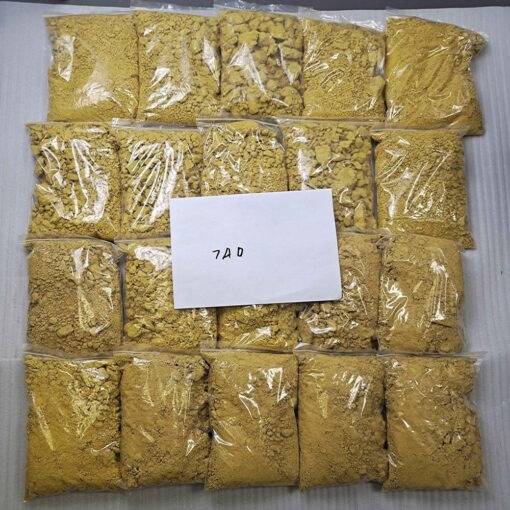
Buy 7-AAD (7-Aminoactinomycin D) Powder Europe
7-AAD (7-Aminoactinomycin D Powder Europe) is a fluorescent chemical compound widely used in laboratory and biomedical research applications, particularly in cell biology, immunology, and flow cytometry. Across Europe and internationally, it is commonly utilized in scientific environments for analyzing cell viability and DNA interactions.
This 7-Aminoactinomycin D Powder Europe article explains:
- What 7-AAD is
- How it works in laboratory settings
- Common scientific applications
- Safety considerations
- Research handling practices
- Frequently asked questions
What Is 7-AAD (7-Aminoactinomycin D)?
7-Aminoactinomycin D Powder Europe commonly abbreviated as 7-AAD, is a fluorescent intercalating dye that binds strongly to DNA.
It is primarily used in:
- Flow cytometry
- Cell viability analysis
- Immunology research
- Cancer and apoptosis studies
- Laboratory staining procedures
7-AAD is structurally related to actinomycin compounds and is valued for its ability to selectively stain cells with compromised membrane integrity.
How 7-AAD Works
7-AAD functions by binding to DNA in cells where the membrane has become permeable or damaged.
Because healthy living cells typically exclude 7-AAD:
- Non-viable or damaged cells become fluorescently labeled
- Viable cells generally remain unstained
This makes it highly useful for:
- Dead cell discrimination
- Viability assays
- Cell cycle studies
Common Laboratory Applications of 7-AAD
1. Flow Cytometry
One of the most common uses of 7-AAD is in flow cytometry for:
- Cell population analysis
- Viability testing
- Immunophenotyping workflows
It is often used alongside fluorescent antibodies in multi-color assays.
2. Cell Viability Assays
Researchers use 7-AAD to distinguish:
- Live cells
- Dead cells
- Damaged cells
This is important in:
- Drug testing studies
- Toxicology experiments
- Biomedical research
3. Cancer and Apoptosis Research
7-AAD may be used in studies involving:
- Tumor cell analysis
- Cell death pathways
- Chemotherapy response research
4. DNA Binding Studies
Because it intercalates into DNA, 7-AAD can also assist in:
- DNA content analysis
- Cell cycle evaluation
- Nuclear staining applications
7-AAD in European Research Laboratories
Across Europe, 7-AAD is commonly used in:
- Universities
- Biomedical laboratories
- Pharmaceutical research facilities
- Clinical research environments
It is an important reagent in modern cellular analysis techniques.
Fluorescent Properties of 7-AAD
7-AAD is valued for its fluorescence characteristics:
- Excited by common laser systems in flow cytometers
- Emits fluorescence in the far-red spectrum
- Compatible with many multi-color experimental panels
These properties make it practical for complex analytical workflows.
Laboratory Safety Considerations
As with many laboratory reagents, 7-AAD should be handled using proper safety procedures.
Recommended precautions may include:
- Protective gloves
- Eye protection
- Laboratory ventilation
- Avoiding direct exposure or inhalation
Because it binds DNA, researchers handle it carefully to minimize unnecessary exposure.
Storage and Handling
Typical laboratory handling practices may involve:
- Storage away from light
- Controlled temperature conditions
- Use of sterile laboratory equipment
- Proper chemical waste disposal procedures
Exact storage recommendations vary depending on manufacturer guidelines.
Importance in Biomedical Research
7-AAD remains important in scientific research because it helps researchers:
- Evaluate cell health
- Improve assay accuracy
- Monitor experimental outcomes
- Analyze cellular responses in detail
Its use has become standard in many flow cytometry protocols.
FAQs
What does 7-AAD stand for?
7-AAD stands for 7-Aminoactinomycin D.
What is 7-AAD used for?
It is mainly used in laboratory research for:
- Flow cytometry
- Cell viability testing
- DNA staining
- Immunology studies
Is 7-AAD a pharmaceutical drug?
No. 7-AAD is primarily a laboratory research reagent used in scientific and biomedical analysis.
Why is 7-AAD important in flow cytometry?
It helps distinguish viable cells from non-viable cells based on membrane integrity and DNA staining.
Does 7-AAD bind DNA?
Yes. 7-AAD intercalates into DNA and fluoresces when excited by specific laser wavelengths.
Is special handling required?
Yes. Standard laboratory safety procedures should be followed when handling fluorescent reagents and DNA-binding compounds.
Can 7-AAD be used in cancer research?
Yes. It is commonly used in apoptosis studies, tumor cell analysis, and other biomedical research applications.
Why is fluorescence important in 7-AAD analysis?
Fluorescence allows researchers to detect and analyze stained cells using laboratory instruments such as flow cytometers.
Is 7-AAD commonly used in Europe?
Yes. It is widely used in European biomedical laboratories and research institutions.
What types of studies use 7-AAD?
Studies involving:
- Cell biology
- Immunology
- Toxicology
- Cancer research
- Cellular viability analysis
commonly use 7-AAD.


Reviews
There are no reviews yet.